Design
Tech
How product discovery makes you stand out
by inheaden·Published on January 23, 2026
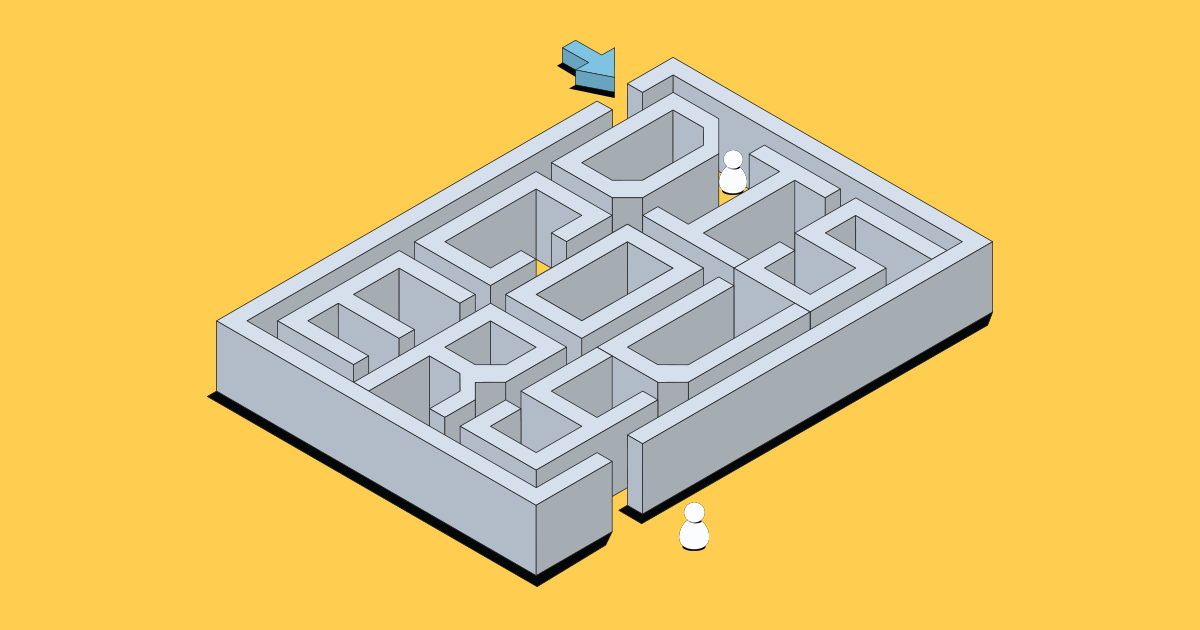
Validating your product idea through discovery workshops
In our experience in the market, both as builders and as consumers of products, we end up using a variety of products that don’t feel complete. For one reason or another, they don’t hold your attention or give you a reason to stick with them. They don’t stand out. And over time, they start to feel almost invisible.
That’s the problem with crowded markets. It’s not that there are too many competitors. It’s that most of them look like each other. Same features. Same pricing page. And the same “all-in-one platform” copy.
And when the market can’t tell you apart, it puts you in the worst possible category:
A commodity.
In a commodity category, customers compare the easiest things to compare:
- price
- features
- integrations
- speed of delivery
- discounts
That’s not differentiation.
Real differentiation isn’t being “slightly better” than your competitor. It’s being clearly different in a way the customer feels. It’s when someone lands on your page or sees your product and thinks, “Oh. This is made for my situation.”
Discovery workshops helps you get there because it forces a habit most teams don’t have: stop guessing. start learning. Not learning in a theoretical way. Learning in the uncomfortable way: talking to users, watching how they behave, testing assumptions, and discovering the real reasons they say “yes,” “no,” or “not now.”
What is an effective strategy to adopt?
Most companies try to stand out by adding more. More features. More pages. More “AI.” More announcements.
It rarely works.
Because the moment you compete on “more,” you invite everyone else to copy you. Or outspend you. Or undercut you. That race has no finish line. The stronger play is to compete on something harder to copy: understanding.
When you deeply understand what your user is trying to do, what blocks them, what they fear, and what they value, you don’t need to shout. You don’t need to stack features like a buffet. You build a product with a point of view. You make trade-offs that look risky to outsiders but feel obvious to the customer.
You design an experience that fits the user’s reality — poorly planned calendars, tight budgets, internal politics, low attention, high pressure, rather than the fantasy version of a user who reads every tooltip and loves exploring settings. That kind of advantage doesn’t come from “best practices.” It comes from doing the work early: validation, research, and testing. Yes, that takes effort upfront. And yes, it can feel slow compared to jumping into delivery.
But building the wrong thing quickly is not speed. It’s just an expensive way to be wrong. Spending early, and wisely tends to save you later. Not by a small amount. By an amount that makes you slightly annoyed you didn’t do it sooner.
Outcomes
Differentiation sounds like a branding topic. It isn’t. It’s a product topic, a strategy topic.
Here’s what changes when you validate your idea properly and let customer insight shape what you build.
You escape feature parity
Feature parity is when your product becomes a checklist item. Prospects compare you against three others and ask the same question every time:
“Do you have X?”
The worst part? You say yes. Everyone else also says yes. Now the conversation moves to price.
Validation helps you avoid this because it shifts your focus from features to outcomes:
- What are users actually trying to accomplish?
- What’s getting in their way?
- What’s the real cost of that friction?
- What does a better result look like to them?
When you build around outcomes, you stop chasing every feature request. You build the few things that create a real advantage.
You find a sharper USP (without forcing it)
A lot of USPs are fake. They’re just adjectives:
- “simple”
- “powerful”
- “seamless”
- “intuitive”
Everyone says them. Nobody believes them.
A strong USP usually sounds more specific. It points to a pain and a promise the customer recognizes immediately.
Validation gives you that specificity. You hear the phrases people repeat. You notice the same complaints. You see what they’ve tried before.
And you can say something real, like:
- “Built for teams that need approvals, not just tasks.”
- “Made for audits and compliance, not just dashboards.”
- “Designed for busy operators who don’t have time to configure.”
That’s differentiation. It comes from focus.
You identify market gaps that aren’t obvious on a competitor’s homepage
Many gaps aren’t “missing features”, but are missing experiences.
Competitors might all do the same core job, but:
- onboarding is confusing
- setup takes too long
- users don’t trust the output
- handoffs break between teams
- reporting is built for analysts, not decision-makers
- the product works… until it doesn’t (edge cases kill it)
Those gaps show up in demos, in reviews, in support tickets, and in the awkward pauses when users say, “So… how would this work for us?”
If you’re doing product discovery well, you find these gaps early. You design around them and make them your edge.
You create differentiation that’s harder to copy
Competitors can copy features. They can copy UI patterns. They can copy your pricing tiers.
What they can’t easily copy is the deeper thing: why your product is shaped the way it is.
If your advantage comes from understanding the user’s context — the constraints, the workflows, the real-world trade-offs. Your product starts to feel right in a way that can’t be replicated by screenshots.
That “rightness” is a competitive moat. Not forever. But long enough to win.
You make your go-to-market message easier
Marketing gets weird when the product is generic. You start saying broad things to appeal to everyone, and you end up resonating with no one.
If your differentiation is rooted in real user insight, your messaging becomes clearer:
- you know what to lead with
- you know what objections to address
- you know what comparisons customers make
- you know what words they use
How to validate your product idea
- Finding and sharpening your USP
Write your USP in one sentence. Then try to swap your company name with your biggest competitor’s. If the sentence still works, you don’t have a USP yet. Use early interviews and testing to find what users value enough to switch for — speed, trust, simplicity, clarity, reduced risk, fewer steps, fewer mistakes. - Identifying market gaps
Look for patterns. Where do users consistently struggle? What do they complain about after trying alternatives? What do they hack together with spreadsheets, Slack threads, or manual workarounds? Gaps often live in the “in-between” moments such as onboarding, handoffs, approvals, reporting, or exceptions. - Fostering innovation through cross-functional brainstorming
Innovation isn’t a lightning bolt. It’s usually a better framing of the problem. Bring design, engineering, sales, and ops into the same conversation early. Let each function share what they see: objections, confusion, recurring requests, and edge cases. Then brainstorm solutions around outcomes, not features. - Competitor analysis
Don’t copy competitors. Study them like a detective. Read reviews. Watch their demos. Notice what they emphasize and what they avoid. Ask: where are they over-serving, and where are they under-serving? What’s their positioning, and who does it exclude? Differentiation often comes from serving the “excluded” user better.
Conclusion
Standing out in a crowded market is not about being louder. It’s about being clearer.
Clear about who you serve.
Clear about what you solve.
Clear about why you’re different.
Clear about the outcome you deliver.
That clarity rarely comes from brainstorming in isolation. It comes from validating early, using design thinking to understand the user’s reality, and using product discovery to turn that understanding into decisions.
You don’t need to over-romanticize the process. You don’t need to run a “perfect workshop.” You just need to do the thing most competitors don’t: earn your differentiation through evidence.
Because in a market full of “me too,” the team that learns fastest doesn’t just build a product.
They build a reason to be chosen.